I gathered the first part of this information by using the Google AI from the internet. These details explore the etymology of the word brooch and the history and the kinds of brooches that have been uploaded to the internet. The last couple of paragraphs are what I imagine when I use the words: ‘Nature Brooch.’
Etymology of the word the Brooch
The term “brooch” originates from the Old French word “broche,” meaning “long needle” or “pointed instrument,” which in turn comes from the Latin “broccus,” meaning “projecting” or “pointed.”
History
Brooches date back to the Bronze Age (circa 2000 BCE). They were used to fasten garments like cloaks and tunics and are worn on the left side of the body. They evolved into decorative jewelry, especially during the Greek, Roman, and Medieval periods. Over time, brooches became status symbols, reflecting wealth and fashion trends.
Kinds of Brooches
Brooches come in many styles, including:
1. Fibulae – Ancient brooches resembling safety pins, used by Greeks and Romans.
2. Cameo Brooches – Featuring carved portraits in materials like shell or stone.
3. Enamel Brooches – Decorated with colourful enamel designs.
4. Jewelled Brooches – Embedded with gemstones or precious metals.
5. Art Nouveau & Art Deco Brooches – Featuring intricate, nature-inspired or geometric designs from the late 19th and early 20th centuries.
6. Bar Brooches – A long, thin design popular in the Victorian and Edwardian eras.
7. Wooden Brooches – Brooches made out of wood: they can be animal and/or flowers.
8. Convertible Brooches – Designed to be worn as pendants, hair accessories, or even belt decorations.
Traditional Nature Brooch
A traditional nature brooch is a kind of brooch inspired by nature or natural elements. They often feature motifs such as flowers, leaves, animals, insects (butterflies or bees), and even landscapes. A nature brooch can be made from gold, silver, enamel, and gemstones, mimicking the colours and textures of the natural world. They became especially popular during the Victorian era when nature symbolism was deeply tied to emotions and meanings.
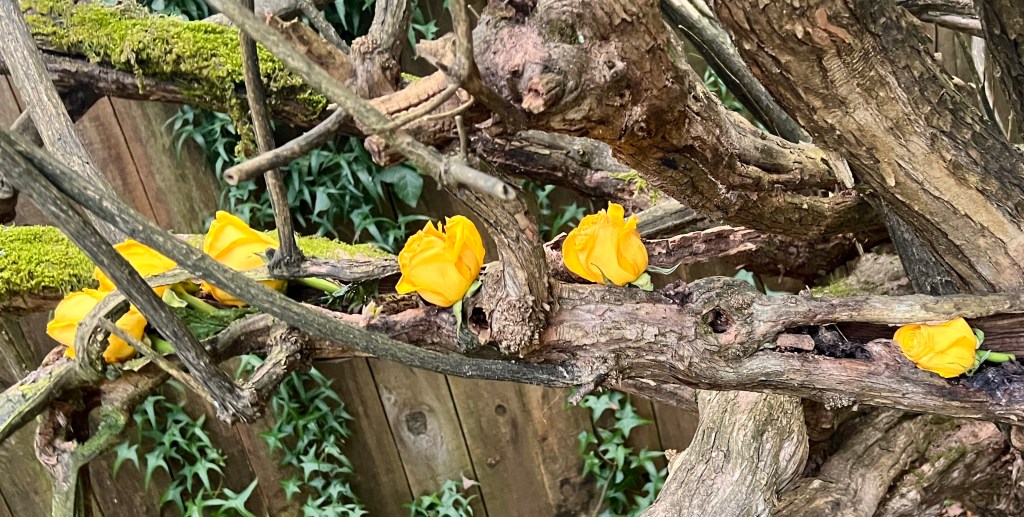
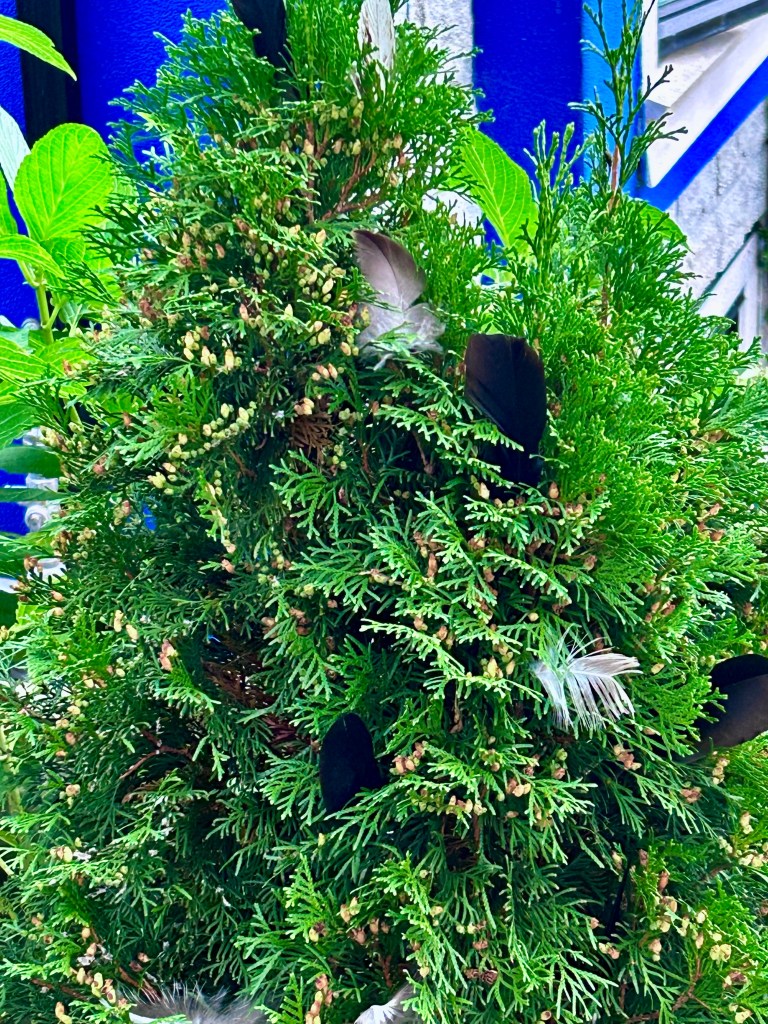
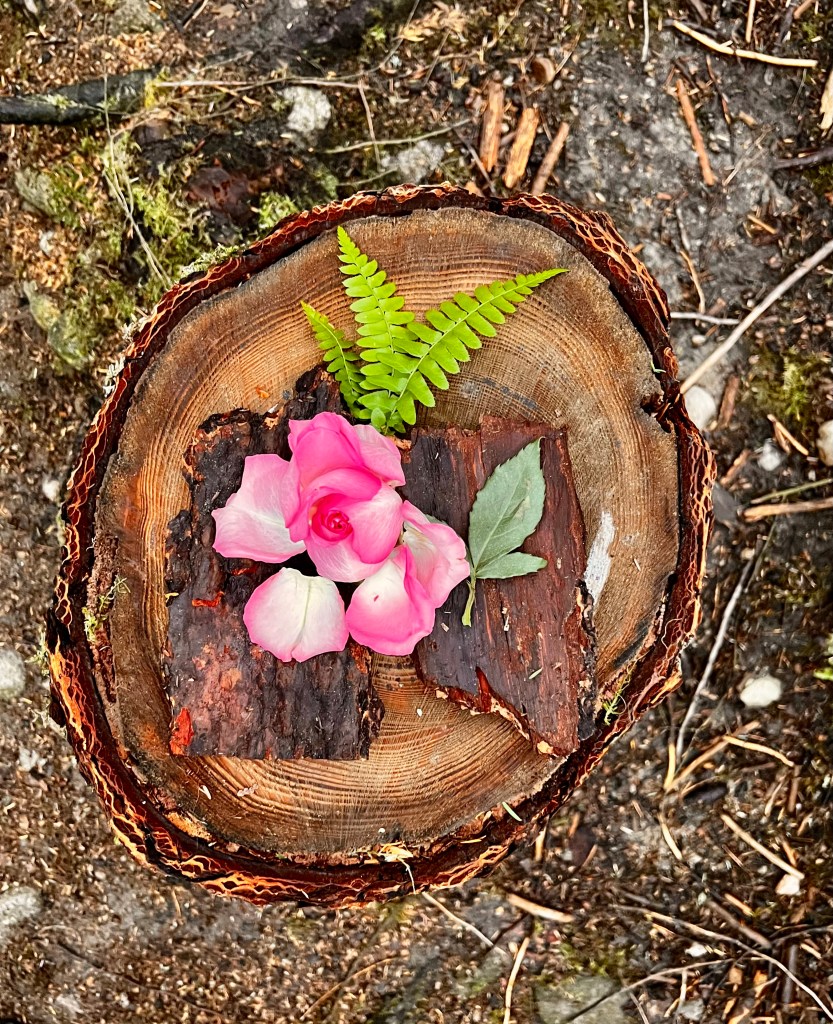
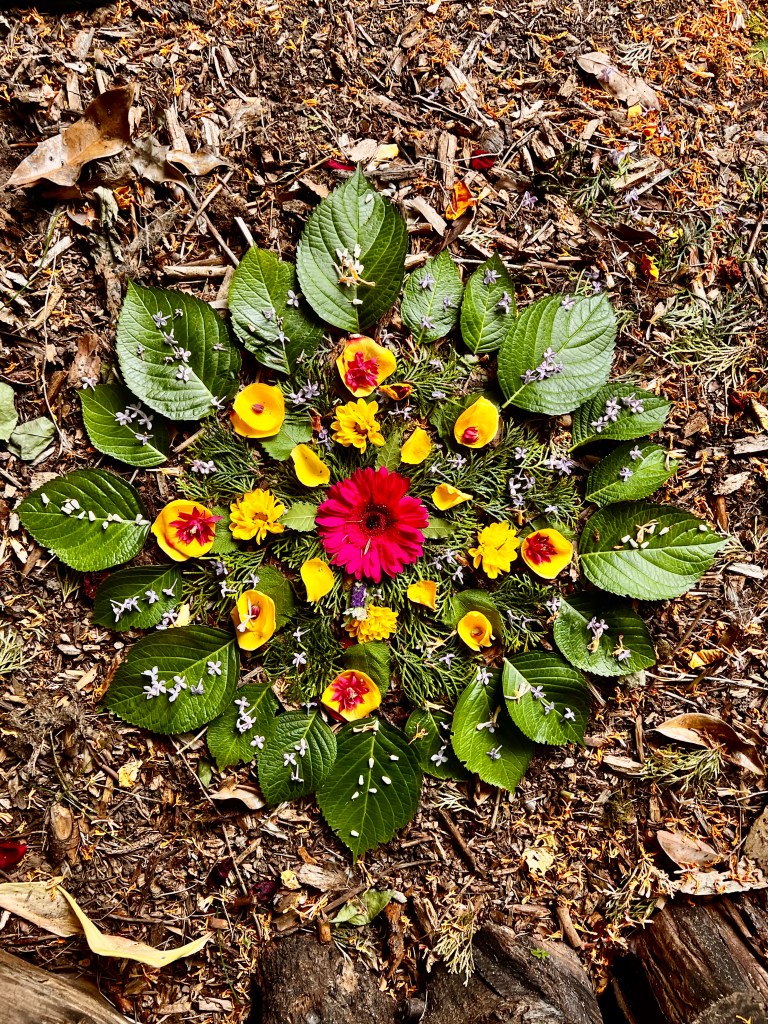
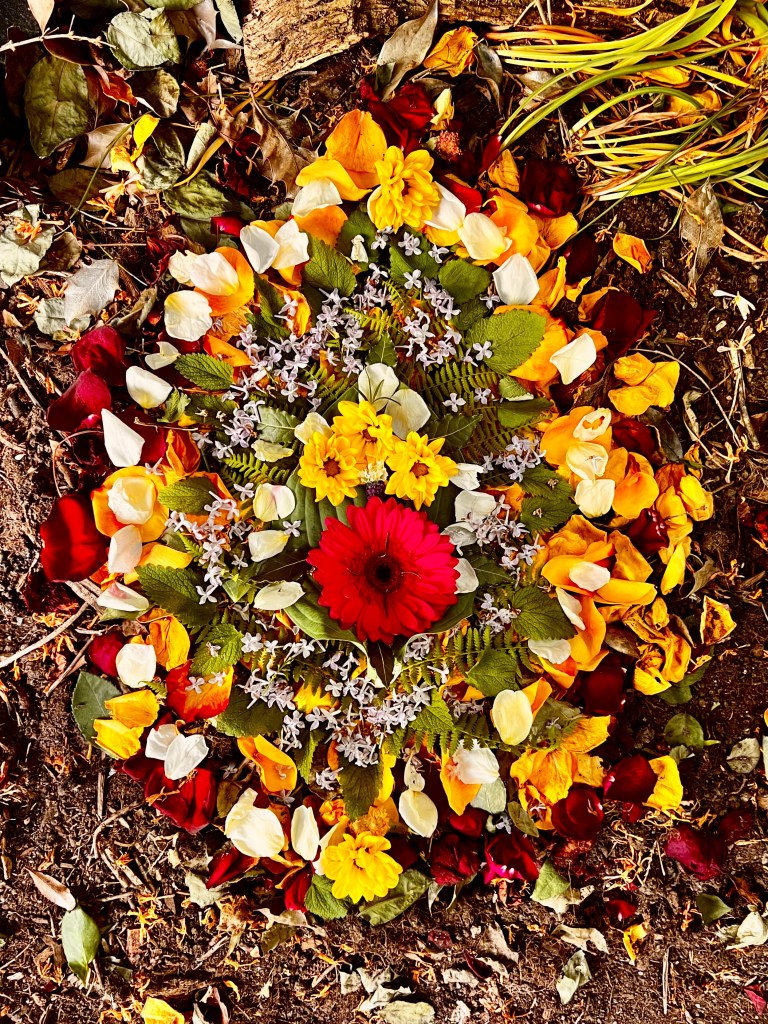
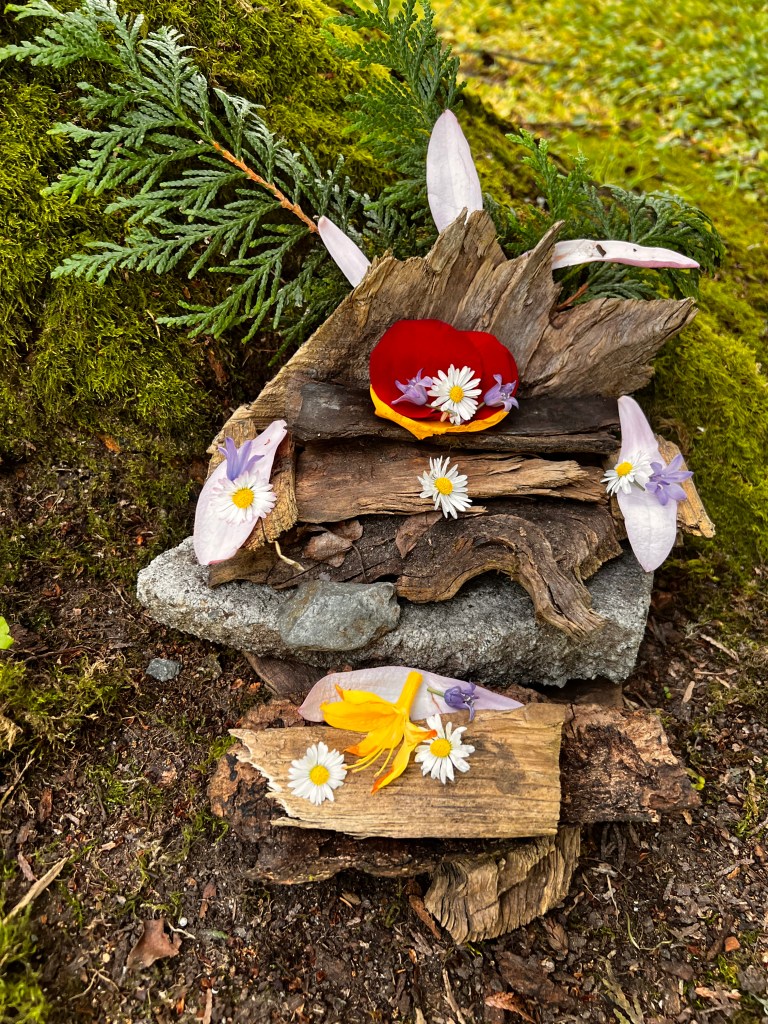
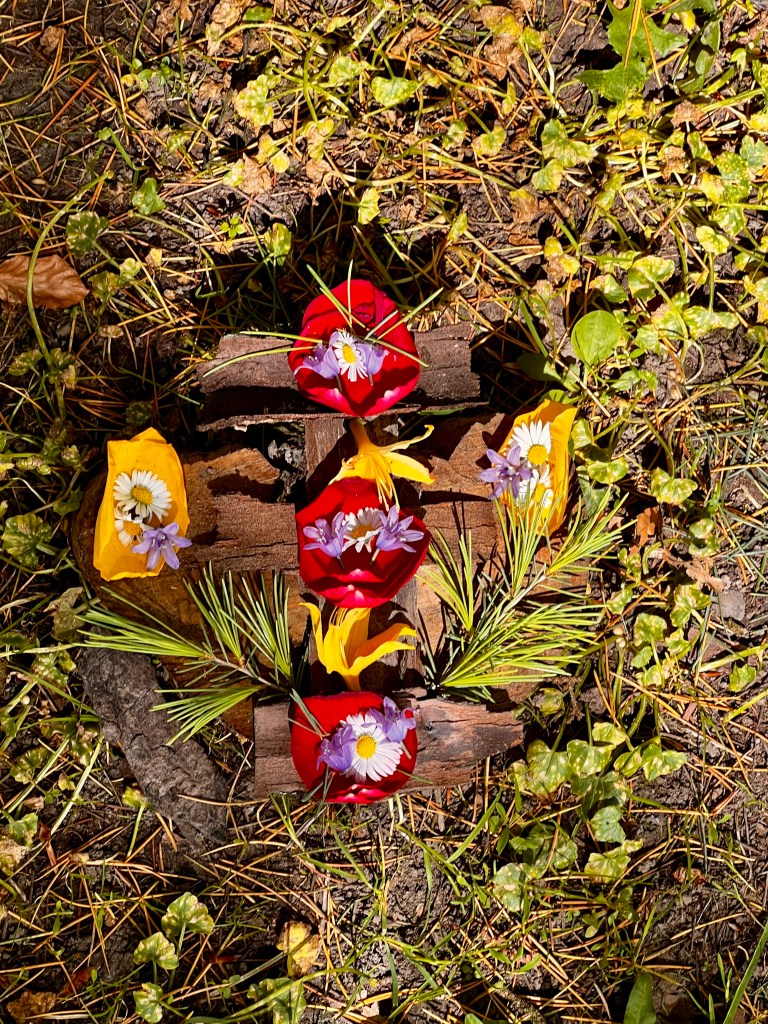
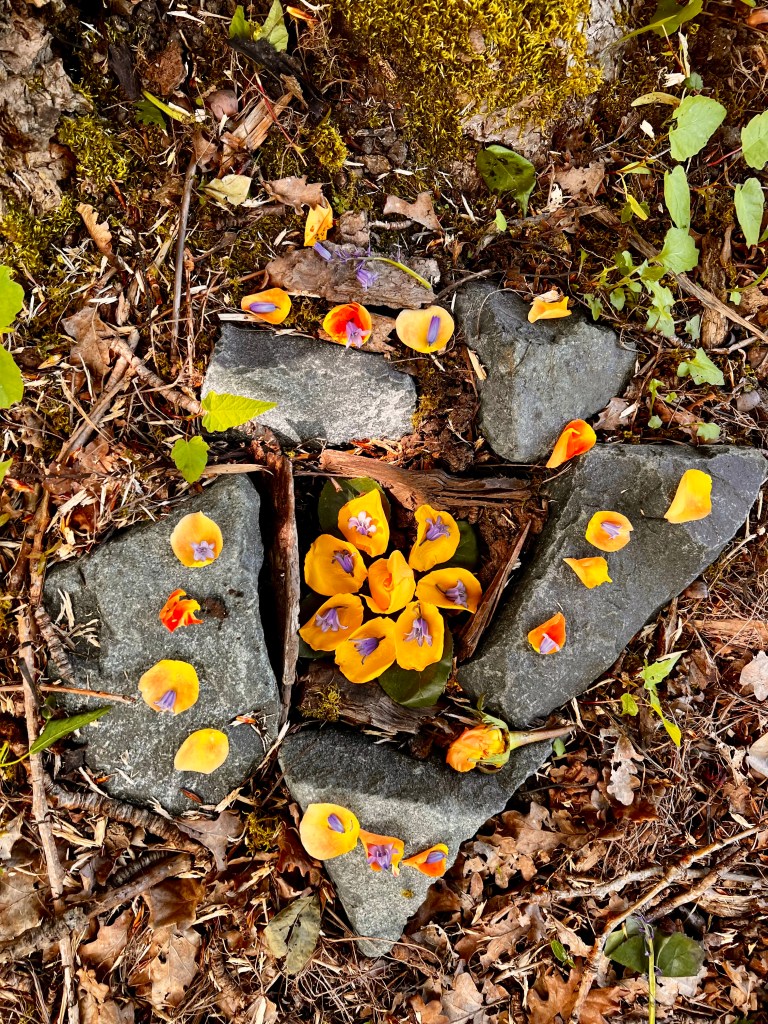
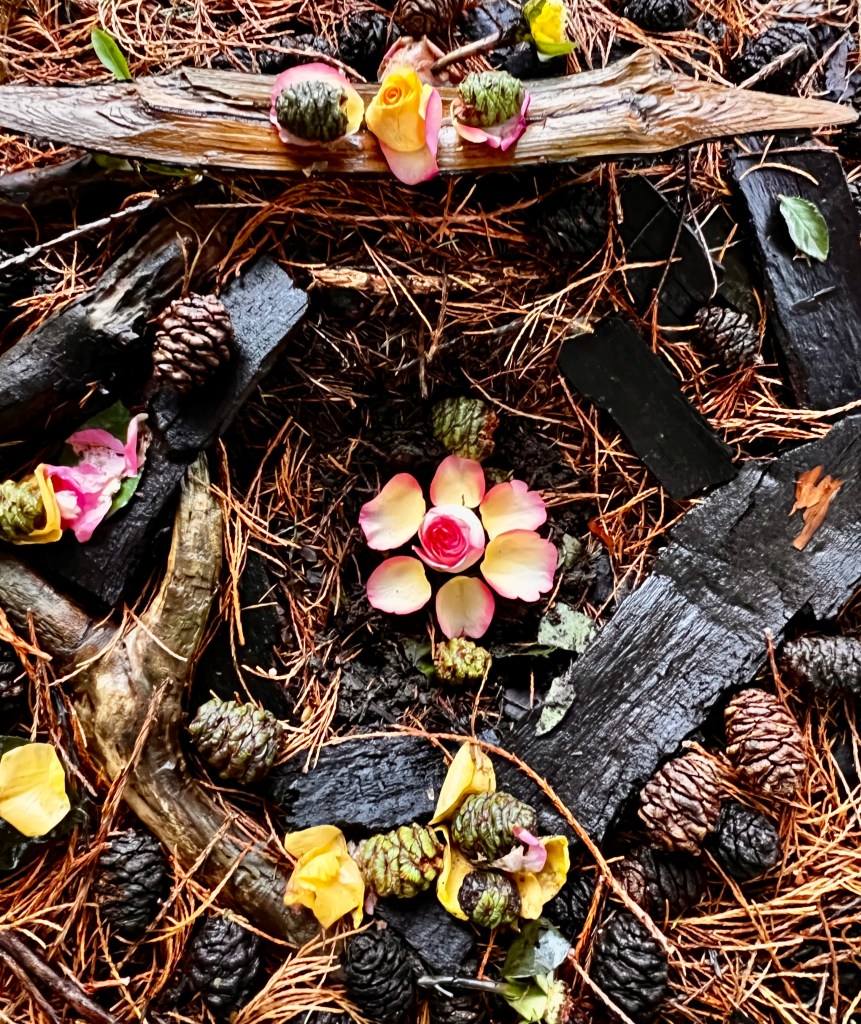
What I am describing and defining as a ‘Nature Brooch’ is a creation, installation or work of art made from any natural element, component of nature or an object found in nature such as beach glass or a pin. They are not necessarily inspired by nature though they may be. They are created from a plant, flower, leaf, piece of wood(bark, branches), stone, moss, shell, feather, tree. Nature Brooches are constructed in nature and left in the natural world in a place such as, but not limited to, the centre of a labyrinth, in a tree, on land, set adrift on water, tossed into the air to be carried by the wind. A Nature Brooch may include a safety pin or pin found outdoors but they are not worn or pinned on a human. Any portion of the ’Nature Brooch,’ such as flowers may be purchased or found in nature.
The action of crafting a ‘Nature Brooch’ is a prayer, meditation, contemplation or celebration. This creative and focused attention cultivates mindfulness, introspection, reflection and connection and it promotes a sense of calm, tranquility and peacefulness.
Examples of a ‘Nature Brooch:
 walkingalabyrinth.com